7 Relaxation Techniques for Social Anxiety (Step-by-Step)
Social anxiety is not just a set of worried thoughts. It lives in the body too: a pounding heart before you speak, hot cheeks when someone looks at you, tight shoulders, shallow breathing and a stomach that will not settle. When your body is in alarm mode, it is very hard to think clearly or enjoy a conversation.
That is why relaxation techniques for social anxiety are so useful. They give you practical ways to calm the body’s stress response, both in the moment and over the longer term. They will not remove every nerve, and that is not the goal. The goal is to bring your anxiety down to a level where you can stay present, think and connect.
This guide walks you through seven techniques step by step, explains when to use each one, and shows you how to build them into a simple daily routine.
Key Takeaways
- Social anxiety triggers the body’s fight-or-flight response, which relaxation techniques can calm.
- Some techniques work quickly in the moment; others work best as a daily practice.
- Slow breathing with a longer exhale is one of the fastest and most discreet tools.
- Practise techniques when you are calm so they work when you are anxious.
- Relaxation supports, but does not replace, gradually facing feared situations.
Why Relaxation Helps Social Anxiety
When you feel socially threatened, your nervous system activates the fight-or-flight response. Adrenaline rises, your heart beats faster, breathing becomes quick and shallow, muscles tense and blood flows away from digestion. In real danger, this is useful. In a meeting or at a party, it mostly gets in the way.
Relaxation techniques activate the opposite system, often called rest-and-digest. Slower breathing, released muscles and a calmer focus send signals to your brain that you are safe. Over time, regular practice can lower your baseline level of tension, so you start from a calmer place.
There is an important nuance. Relaxation helps you stay in situations long enough to learn they are safe. It should not become a way of avoiding anxiety at all costs. If you only go to events when you feel perfectly relaxed, you may never go. Think of these techniques as support for facing your fears, not a replacement. Our guide to safety behaviours in social anxiety explains this balance.
7 Relaxation Techniques for Social Anxiety
1. Extended exhale breathing
Best for: quick calm before or during social situations.
- Breathe in gently through your nose for a count of four.
- Breathe out slowly through your mouth or nose for a count of six to eight.
- Repeat for at least six breaths, or two to three minutes.
The longer exhale is the key. It slows your heart rate and signals safety to your nervous system. You can do this discreetly in a meeting, on the bus or in a toilet cubicle before an event. Our article on breathing exercises for social anxiety covers several more variations.
2. Box breathing
Best for: steadying yourself when your mind is racing.
- Breathe in for four counts.
- Hold for four counts.
- Breathe out for four counts.
- Hold for four counts.
- Repeat four to six times.
The steady rhythm gives your mind something to focus on, which interrupts anxious thinking. If holding your breath feels uncomfortable, shorten the holds to two counts.
3. Progressive muscle relaxation (PMR)
Best for: releasing built-up tension, especially in the evening.
- Sit or lie somewhere comfortable.
- Starting with your feet, tense the muscles firmly for five seconds.
- Release suddenly and notice the feeling of relaxation for 10 to 15 seconds.
- Move up through your calves, thighs, stomach, hands, arms, shoulders, neck and face.
- Finish with a few slow breaths.
PMR teaches you to notice the difference between tension and relaxation. Many socially anxious people carry tension in their shoulders and jaw without realising it. After a few weeks of practice, you can often release tension quickly with a single deliberate exhale.

4. Grounding with the senses
Best for: pulling your attention out of anxious thoughts in public.
Use the 5-4-3-2-1 method: notice five things you can see, four you can hear, three you can touch, two you can smell and one you can taste. Or simply press your feet into the floor and notice the sensation for thirty seconds.
Grounding works because social anxiety drags your attention inward. Focusing on the outside world breaks that loop. Our article on grounding techniques for social anxiety offers ten more options.
5. Guided imagery
Best for: calming down before sleep or before a stressful event.
- Close your eyes and breathe slowly.
- Imagine a place where you feel completely safe and calm, such as a beach, a forest or a cosy room.
- Notice the details: colours, sounds, temperature, smells.
- Stay there for three to five minutes, breathing slowly.
You can also use imagery to rehearse a social situation going well. Picture yourself arriving calmly, greeting people and handling a pause with ease. This kind of positive rehearsal can reduce anticipatory anxiety.
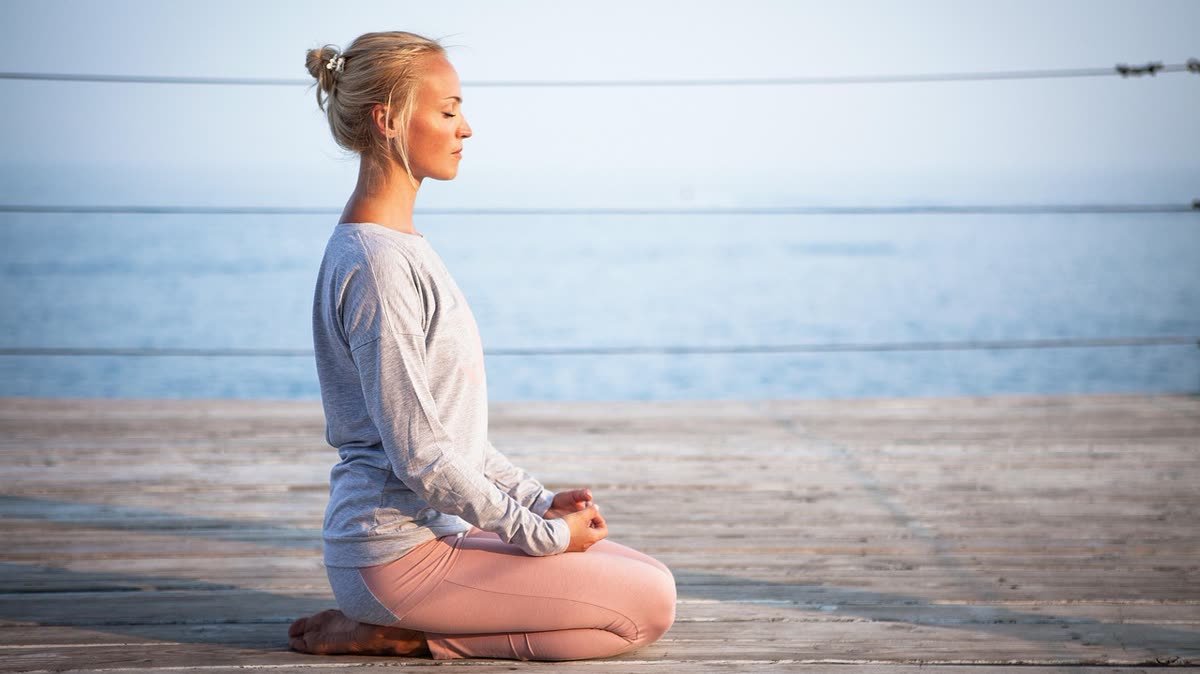
6. Mindfulness meditation
Best for: reducing overall anxiety and overthinking over time.
- Sit comfortably and focus on the sensation of breathing.
- When your mind wanders to worries, gently notice it and bring your attention back.
- Start with five minutes a day and build up gradually.
Mindfulness helps you notice anxious thoughts without getting swept away by them. Research suggests it can reduce anxiety symptoms when practised regularly. Our full guide to meditation for social anxiety gives six practices to try.
7. Physical release through movement
Best for: burning off adrenaline before an event.
A brisk ten-minute walk, a few stretches, shaking out your hands and arms or climbing some stairs can help use up the stress hormones your body has released. Regular exercise also lowers baseline anxiety. If you are not sure where to start, our article on the best sports for introverts has ideas that suit quieter people.
Which Technique Should You Use When?
| Situation | Best techniques | Time needed |
|---|---|---|
| Five minutes before a meeting | Extended exhale breathing, movement | 2 to 5 minutes |
| During a conversation | Discreet slow breathing, grounding | A few seconds |
| Mind racing with worry | Box breathing, mindfulness | 2 to 10 minutes |
| Evening after a social day | Progressive muscle relaxation | 10 to 15 minutes |
| Trouble sleeping before an event | Guided imagery, PMR | 5 to 15 minutes |
| Daily practice | Mindfulness, PMR, exercise | 10 to 20 minutes |
A Simple Daily Relaxation Routine
You will get the most benefit from practising regularly, not just when anxiety hits. Try this ten-minute routine every day for two weeks:
- Morning (3 minutes): Extended exhale breathing while your coffee or tea brews.
- Midday (2 minutes): A quick grounding check: feet on the floor, five things you can see.
- Evening (5 to 10 minutes): Progressive muscle relaxation or a short mindfulness session.
Practising when you are calm is essential. It is like learning to swim in shallow water before you need it in the deep end. Once the techniques feel familiar, they will be much easier to use in stressful moments.
Common Mistakes to Avoid
- Only trying techniques at peak anxiety. They work much better if practised beforehand.
- Expecting instant results. Some techniques bring quick relief, but the biggest benefits build over weeks.
- Breathing too deeply or fast. Over-breathing can make you lightheaded. Keep it slow and gentle.
- Using relaxation to avoid. Calm yourself, then still go to the event.
- Giving up after a bad day. Some days anxiety will be higher no matter what. That is normal.
Combining Relaxation With Other Strategies
Relaxation techniques work best as part of a wider approach. Pair them with:
- Challenging anxious thoughts, using tools from our guide to cognitive distortions in social anxiety.
- Gradual exposure, building an exposure hierarchy of situations to face step by step.
- Self-compassion, treating yourself kindly when things feel hard. See self-compassion for shy people.
- Healthy routines, including sleep and limiting caffeine. Our article on a morning routine for shy people can help.
Practise calm, then practise people. ShyMind’s guided tools include breathing and grounding exercises, and the AI Coach lets you rehearse real conversations once you feel steady. Start free.
When to Get Extra Support
If anxiety feels overwhelming despite regular practice, or if you experience panic attacks, it is worth talking to a doctor or therapist. Cognitive behavioural therapy (CBT) is a well-established treatment for social anxiety. The NHS offers clear guidance on breathing exercises for stress and on getting further help. Our guide on how to talk to your doctor about social anxiety can help you start that conversation.
Keep Reading
- Social anxiety exercises you can practise this week
- Journaling prompts for social anxiety
- Anxiety and wellbeing self-assessments
Frequently Asked Questions
What is the fastest relaxation technique for social anxiety?
Slow breathing with a longer exhale, such as breathing in for four and out for six to eight, is one of the fastest and most discreet techniques. Many people feel calmer within a minute or two.
Can relaxation techniques cure social anxiety?
Relaxation techniques help manage symptoms, but they work best combined with gradually facing feared situations and challenging anxious thoughts. Together, these approaches can lead to lasting improvement.
How often should I practise relaxation techniques?
Daily practice of ten to fifteen minutes works well. Practising when calm makes the techniques far more effective when you are anxious.
Can I use relaxation techniques during a conversation?
Yes. Slow, gentle breathing and grounding through your feet can be done discreetly while someone else is talking, without anyone noticing.
Why do I feel more anxious when I try to relax?
Some people notice their body more when they slow down, which can feel uncomfortable at first. Start with short sessions, keep your eyes open if that feels safer, and try movement-based techniques instead.
A Calmer Body, a Clearer Mind
Your body’s alarm system is trying to protect you, but it often overreacts in social situations. Relaxation techniques give you a way to turn the volume down. Practise them regularly, use them before and during challenging moments, and let them support you as you gradually face the situations that matter to you.
Ready to begin? Create your free ShyMind account to explore guided tools, practise with the AI Coach and take the free shyness test.
This article is for general information and isn’t a substitute for advice from a doctor or qualified mental health professional. If you’re struggling, please reach out for support.